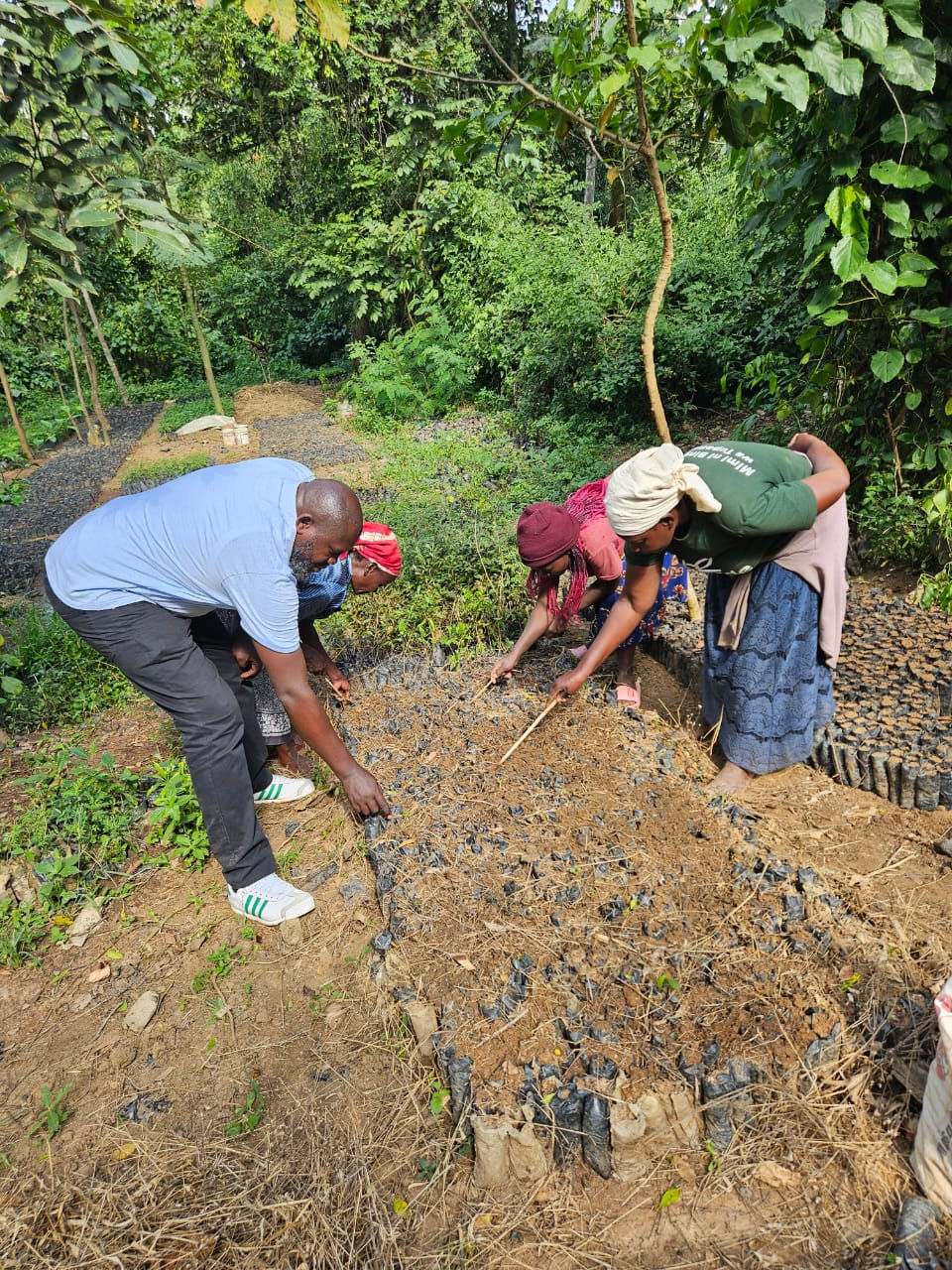
Agroecology for Sustainable Farming at Tunza Fresh Farms
This project is being implemented across our operations, with a demonstration Tunza model organic farm located in Kisumu County, Kenya. The Kisumu site serves as a living lab where farmers, students, researchers, and visitors can learn and engage with agroecological practices firsthand. It showcases how traditional crops, and indigenous knowledge can be combined with modern agroecological techniques to create a thriving, self-sustaining ecosystem
The Agroecology Project focuses on building sustainable food systems by:
-
Promoting biodiversity through intercropping, crop rotation, and polycultures
-
Enhancing soil fertility using composting, mulching, and agroforestry
-
Conserving water through rainwater harvesting , dryland farming, and efficient irrigation systems
-
Supporting seed saving and exchange to preserve local varieties and improve resilience
-
Reducing dependency on chemical inputs through organic pest management , including push-pull technology
-
Empowering women and youth through training, leadership opportunities, and market linkages

Demonstration Organic Farm – Kisumu Model Site
These crops are not only nutritionally dense but also well-adapted to local conditions, requiring fewer external inputs and offering greater resistance to pests and diseases.
Agroforestry Integration
Trees like Grevillea robusta and Calliandra calothyrsus are integrated into the cropping system. These trees:
-
Fix nitrogen in the soil
-
Provide shade and windbreaks
-
Contribute to biomass for mulching and composting
Water Conservation Techniques
To combat erratic rainfall patterns, we use:
-
In-situ water harvesting (e.g., terraces, swales, water pans)
-
Ex-situ rainwater collection from rooftops stored in tanks
-
Drip irrigation and mulching to reduce evaporation
Pest Management without Chemicals
We employ natural pest control methods such as:
-
Push-pull technology to repel pests like stemborers
-
Companion planting (e.g., marigolds with vegetables)
-
Homemade botanical sprays made from neem, chili, and garlic
Seed Saving and Exchange
We train farmers on how to identify and save high-quality seeds from their best-performing plants. This practice:
-
Preserves genetic diversity
-
Reduces dependency on commercial seed suppliers
-
Encourages adaptation to local growing conditions
Three Key Focus Areas of the Agroecology Project
-
Climate Resilience
-
We promote drought-tolerant crops and soil conservation techniques to help farmers adapt to climate change.
-
By reducing reliance on imported fertilizers and pesticides, we also lower the carbon footprint of farming.
-
-
Empowerment of Women and Youth
-
Women and youth lead various aspects of the Kisumu farm, from planting and harvesting to marketing and education.
-
Training programs focus on entrepreneurship, leadership, and value addition to build economic independence.
-
-
Food Security in Urban and Rural Communities
-
In urban areas, we support rooftop gardens and vertical farming projects to increase access to fresh, safe produce.
-
In rural areas, we work with smallholder farmers to scale up agroecological practices and connect them to fair markets.
-
Educational Outreach & Community Engagement
The Kisumu model farm doubles as an agroecology learning center. We host:
-
Field days and farmer-to-farmer exchanges
-
Internships for agricultural students
-
Workshops on composting, seed saving, and organic farming
-
School visits to educate children about sustainable food systems
We also collaborate with research institutions, NGOs, and government agencies to share data and improve extension services.
Demonstration Organic Farm – Kisumu Model Site

Our Kisumu demonstration farm is a flagship component of the Agroecology Project. Located in a region known for its rich agricultural potential and diverse cultural heritage, the farm features:
Diverse Crop Planting
We grow a wide variety of traditional vegetables and indigenous crops, such as: